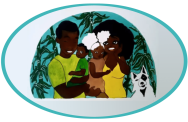

Pain is not necessary for a child to learn
Physical punishment, also known as corporal punishment, is defined by the Oxford Dictionary as caning (beating with a cane) or flogging. Websters Dictionary definition is punishment that involves hitting someone.
For far too long this type of punishment especially in children has been accepted as the norm, but studies have shown that this method of punishment does not teach them about responsibility.
Nor does physical punishment teach children right from wrong.
In an article entitled, The Consequences of Corporal Punishment written by Andrew Bauld, December 2, 2019 (Harvard, Graduate School of Education). Mr. Bauld highlighted the extensive research being done by education Ph.D. student Jorge Cuartas, also an economist, a research assistant examining the impact of the Colombian Civil War on displaced citizens, when he began to trace the connection between violence occurring at the national level and violence impacting children. Cuartas made it his mission to shine a light on the practice in his home country and worked to ban its use. Colombia has been plagued by civil conflict for more than half a century.
Cuartas concludes. “These people were receiving economic support, but we weren’t thinking about the consequences for these young children living in this context and the cycle of violence that was going on”.
Cuartas was shocked at the testimonies of parents citing the use of violence to discipline their children. He was also stunned by the lack of research highlighting the problem of corporal punishment in the country. He found that in 2015 nearly 1.7 million children under the age of 5, were exposed to physical punishment.
Further studies by Cuartas, co-authoring with Harvard University psychology professor, Katie McLaughin which show the neurobiological impact of corporal punishment on a child’s brain, “I was very surprised to find that corporal punishment affects the same brain areas that are affected by severe physical and sexual abuse,” Cuartas observed, “The magnitude was lower, but to see that spanking impacts a child’s brain in the same way was a big surprise.”
There are quite a number of ways that children are usually physically punished. Just to name a few: Spanking, slapping, pinching, pulling, shaking. Hitting with an object such as a belt, stick or whip, which contribute to a lifetime effect on the child’s brain.
Some of the negative effects of physical punishment are: increased aggression. Mental health challenges, drug and alcohol abuse, depression, anxiety, and anti-social behavior. Bullying other children, fearing their parents, low self-esteem and thinking that hitting is okay.
Harvard University, Center on the Developing Child suggests 8 Things to Remember About Child Development. Click on the link to learn more: https://developingchild.harvard.edu/resources/8-things-remember-child-development/ .
However, observe # 2 and #4 below:
#2 Development is a highly interactive process and life outcomes are not determined solely by genes. – Children are born with the capacity to learn to control impulses, focus attention and retain information in memory, but there experiences as early as the first year in life lay a foundation for how well these and other executive function skills develop.
Basic aspects of brain function, such as the ability to see and hear effectively, do depend critically on very early experiences as do some aspects of emotional development.
And while the regions of the brain dedicated to higher-order functions-which involves most social, emotional, and cognitive capacities, including multiple aspects of executive functioning-are also affected powerfully by early influences, they continue to develop well into adolescence and early adulthood.
Also from The Center on the Developing Child is the study of toxic stress:
Toxic stress is described as the prolonged activation of stress response system in the absence of protective relationships.
Therefore, in relation to physical punishment, this method of discipling action will only enhance the stress levels of the child leading to various mental and social challenges.
A child who experiences physical punishment as correction, will develop a negative impact on his or her future emotional stability. Inflicting pain on that child with the intention that the child will not repeat the action will not produce the desired outcome.
In- fact the child’s focus will only be on the pain inflicted.
Physical punishment is so often administered to young children that many countries fail to realize that this is actual abuse.
And the lack of awareness that many of the different types of violence in their respective countries quite often stems from this type of punishment.
Abused children usually grow up becoming abusers themselves hence the term “Children live what they learn,” is such an accurate descriptive phrase.
Avoid physical force when enforcing disciplinary measures to your child.
Children are the future, empower them!
There are many ways to guide them as to what to do differently.
Read FamilyFirstNJA 24 Transformative Tips and begin empowering your children for the future today.
Works Cited
8 Things to Remember about Child Development. Center on the Developing Child. Harvard University. Retrieved 4/2021. https://developingchild.harvard.edu/resources/8-things-remember-child-development/
Bauld, Andrew. The Consequences of Corporal Punishment: Connecting research and policy action to reduce the harmful practice in Colombia and around the world. (12/2019). Harvard Graduate School of Education. Retrieved 4/2021. https://www.gse.harvard.edu/news/19/12/consequences-corporal-punishment
Shonkoff. Jack P. Establishing a Level Foundation for Life: Mental Health Begins in Early Childhood. National Scientific Council on the Developing Child. Center on the Developing Child. Retrieved on 4/2021. http://46y5eh11fhgw3ve3ytpwxt9r.wpengine.netdna-cdn.com/wp content/uploads/2008/05/Establishing-a-Level-Foundation-for-Life-Mental-Health-Begins-in-Early-Childhood.pdf
Toxic Stress. Center on the Developing Child. Harvard University. Retrieved 4/2022. https://developingchild.harvard.edu/science/key-concepts/toxic-stress/
